

IN THE GROUND IN DALLAS
0tiny forests planted
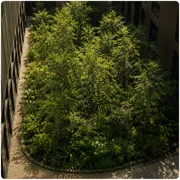
Westmoreland Park in West Oak Cliff, the first urban tiny forest in Texas, and the Pardes Shalom Tiny Forest at Temple Shalom, with a third on the way at St. Mark’s School of Texas.

Plan-T plants Tiny Forests to heal the land and communities.





Plan-T envisions a future where cities are alive with restored natural systems, where tiny forests are woven into neighborhoods healing the land, cooling the environment and bringing people back into relationship with nature and one another.
In this future, underused urban spaces become thriving ecosystems, communities take pride in caring for the places they live, and cities are no longer separated from nature but function as a part of it, supporting healthier, more connected and resilient lives for all.
Lorem ipsum dolor sit amet, consectetur adipiscing elit, sed do eiusmod tempor incididunt ut labore et dolore magna aliqua. Ut enim ad minim veniam, quis nostrud exercitation ullamco laboris.
IN THE GROUND IN DALLAS
0tiny forests planted
Westmoreland Park in West Oak Cliff, the first urban tiny forest in Texas, and the Pardes Shalom Tiny Forest at Temple Shalom, with a third on the way at St. Mark’s School of Texas.
ONE PLANTING DAY
0planted in a morning
At Temple Shalom, eighteen hundred square feet of former pecan orchard went in on a single day, in a U around an outdoor classroom the children use.
RETURNED PER DOLLAR
$0back to the city
The U.S. Forest Service puts the return of urban tree cover at $2.70 for every dollar spent, in cooler air, cleaner water, and lower energy bills.
THE MIYAWAKI METHOD
0faster to a canopy
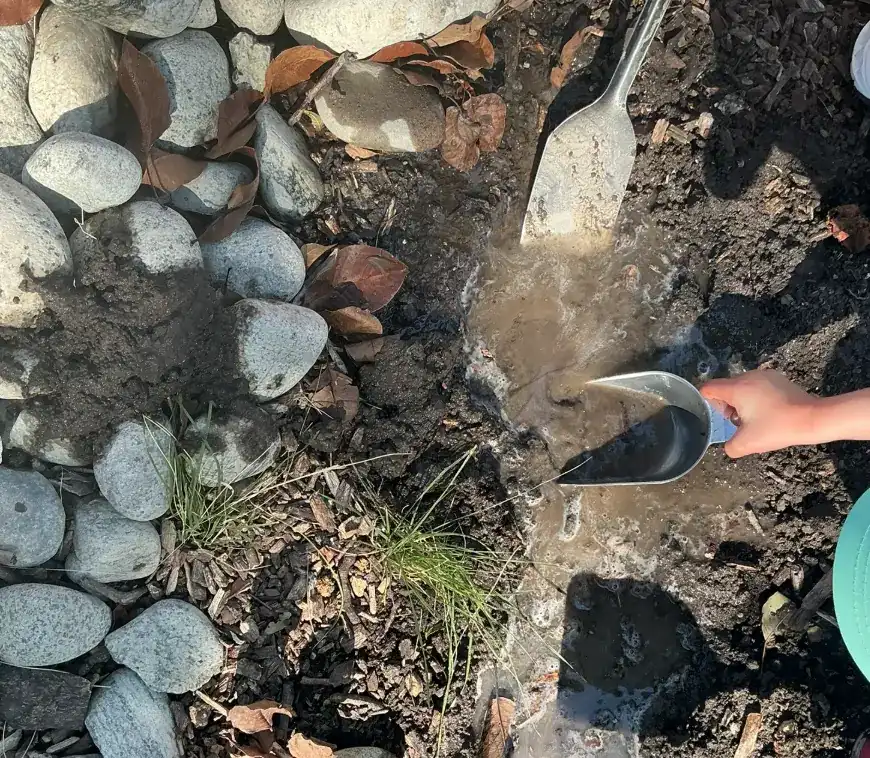
Three to five native saplings per square meter, all four layers in on the same day. Packed that close, a young wood grows about ten times faster than a conventional planting.


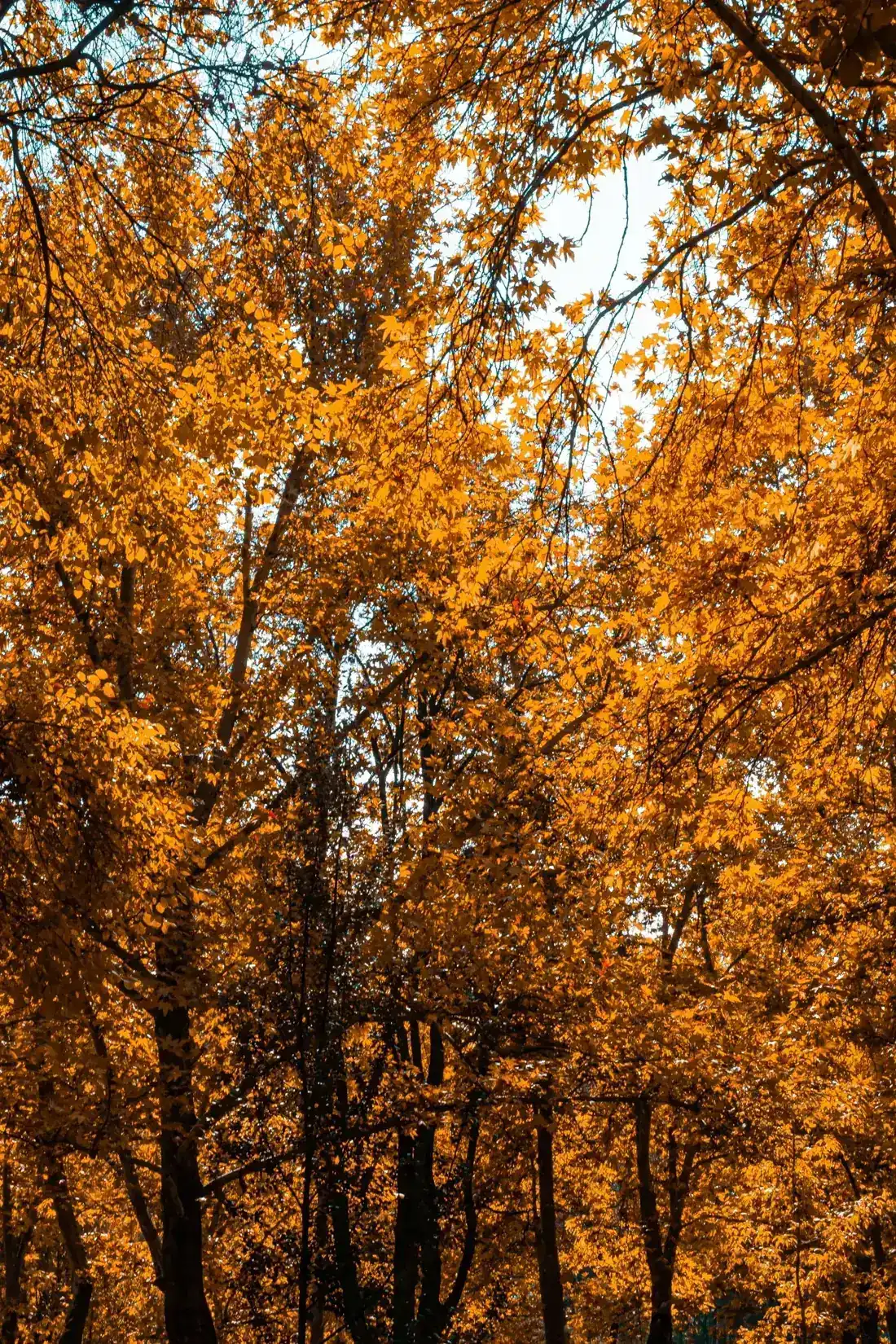
Lorem ipsum dolor sit amet, consectetur adipiscing elit, sed do eiusmod tempor incididunt ut labore et dolore magna aliqua. Ut enim ad minim veniam, quis nostrud exercitation ullamco laboris.


Urban forests intercept and absorb pollution straight out of the atmosphere. A dense canopy is a filter nobody has to change, working on the block where people are actually breathing.
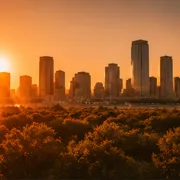
Concrete keeps the heat long after the sun has gone. Green space offsets the urban heat island, and shade turns a street you hurry across into one you can stand on.
One hundred mature trees catch about 250,000 gallons of rainwater a year, which lowers the flood risk and holds the soil in place instead of letting it wash off.
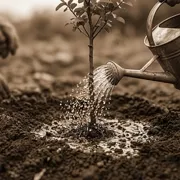
Four layers of native planting bring back what the concrete pushed out. The birds arrive first, then the pollinators, then everything that follows them in.
Trees relieve what is sometimes called nature deficit disorder. Their beauty lifts the mood of a street, and access to green space is tied to better mental and physical health.
Trees become landmarks, and landmarks give a neighborhood a new identity. A forest is one thing the whole block built together, and it is what they gather under afterwards.
The city becomes the forest through people. Pick the path that fits, and follow it all the way to a square meter in the ground.
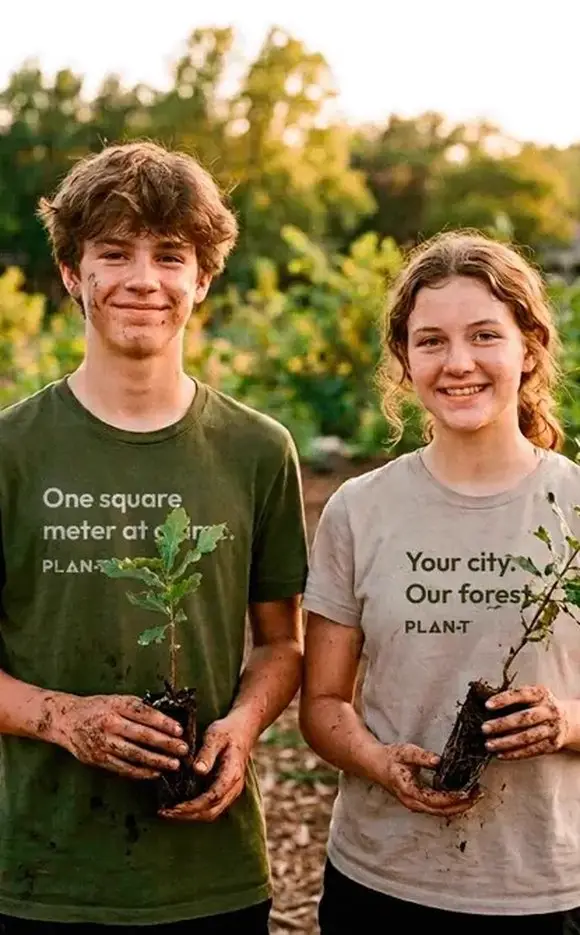
Sponsor a square meter and we plant, map, and tend your own patch of native forest.
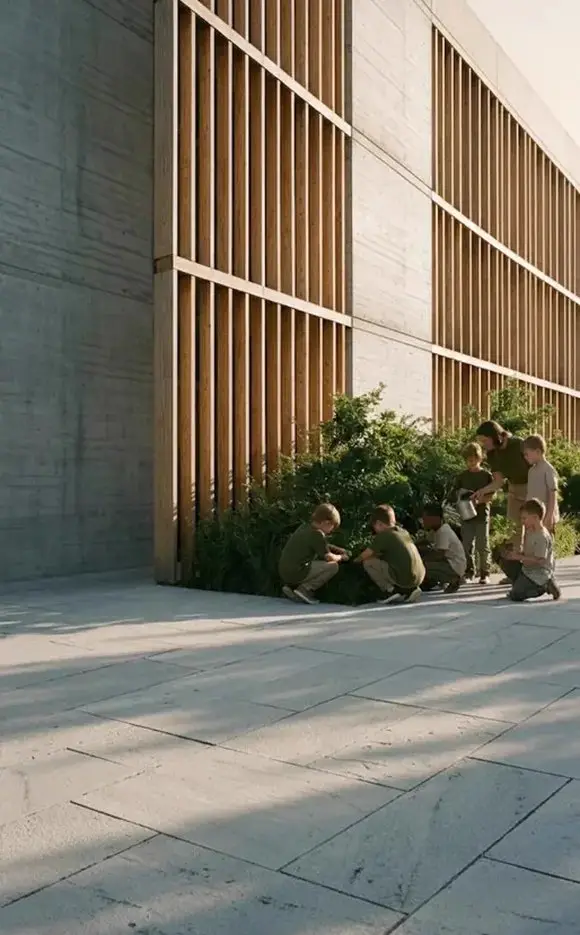
Turn a schoolyard into a living classroom where students plant and study a real forest.
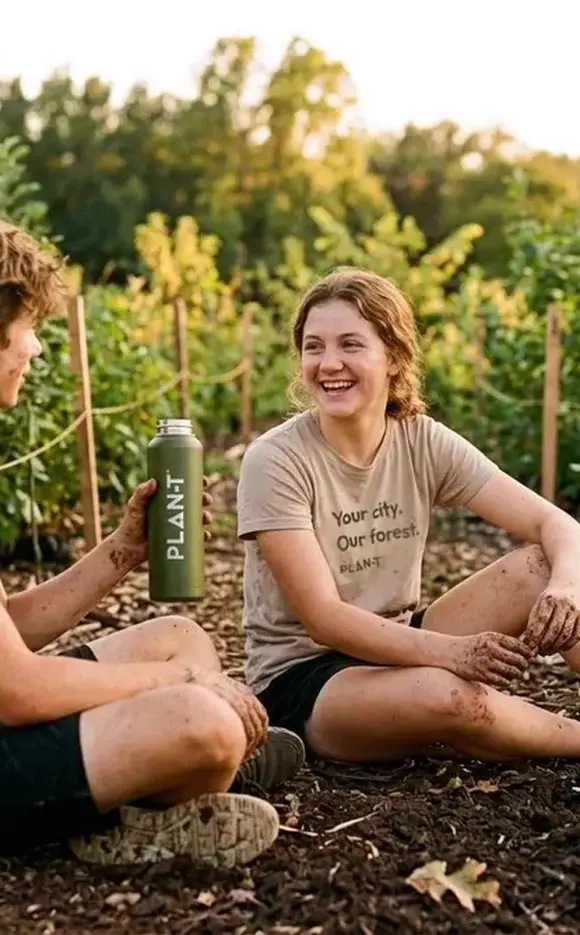
Join a community planting day, get your hands in the soil, and earn service hours.

Green your campus or sponsor a neighborhood forest as measurable, local climate action.












Schoolyards, church lots, campuses, parks, and streets.
Sponsor, host, or volunteer, and we handle the rest.
About three years of care, then it needs no irrigation.
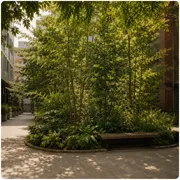
A fast native woodland on a plot as small as a few parking spaces.
Dense native planting in four layers, not trees along a curb.
Lost canopy, rising heat, neighborhoods short on green.
Tiny forests, the Miyawaki method, and what is growing across Dallas.
Every dollar goes into soil, native saplings, and the hands that plant them.